
The Great Van Gogh Pikachu Heist: When Card Collecting Goes Artfully Insane
Pokémon Van Gogh Museum collaboration ignited frenzy as collectors clamored for exclusive Pikachu card, overshadowing art appreciation.
The scene at Amsterdam's venerable Van Gogh Museum was less "Starry Night" and more "Night of the Living Greed" back in late 2023. What began as a charming, culturally enriching collaboration between the world of Pokémon and the legacy of a post-impressionist master swiftly devolved into a spectacle of avarice that would make even Team Rocket blush. The Pokémon Company, in its infinite wisdom, decided to celebrate art by unleashing its most ravenous fanbase upon a hallowed cultural institution, offering a limited-edition promo card as a souvenir. The result was a masterclass in collective madness, proving once again that the phrase "exclusive Pokémon card" acts as a siren song to the utterly unhinged.
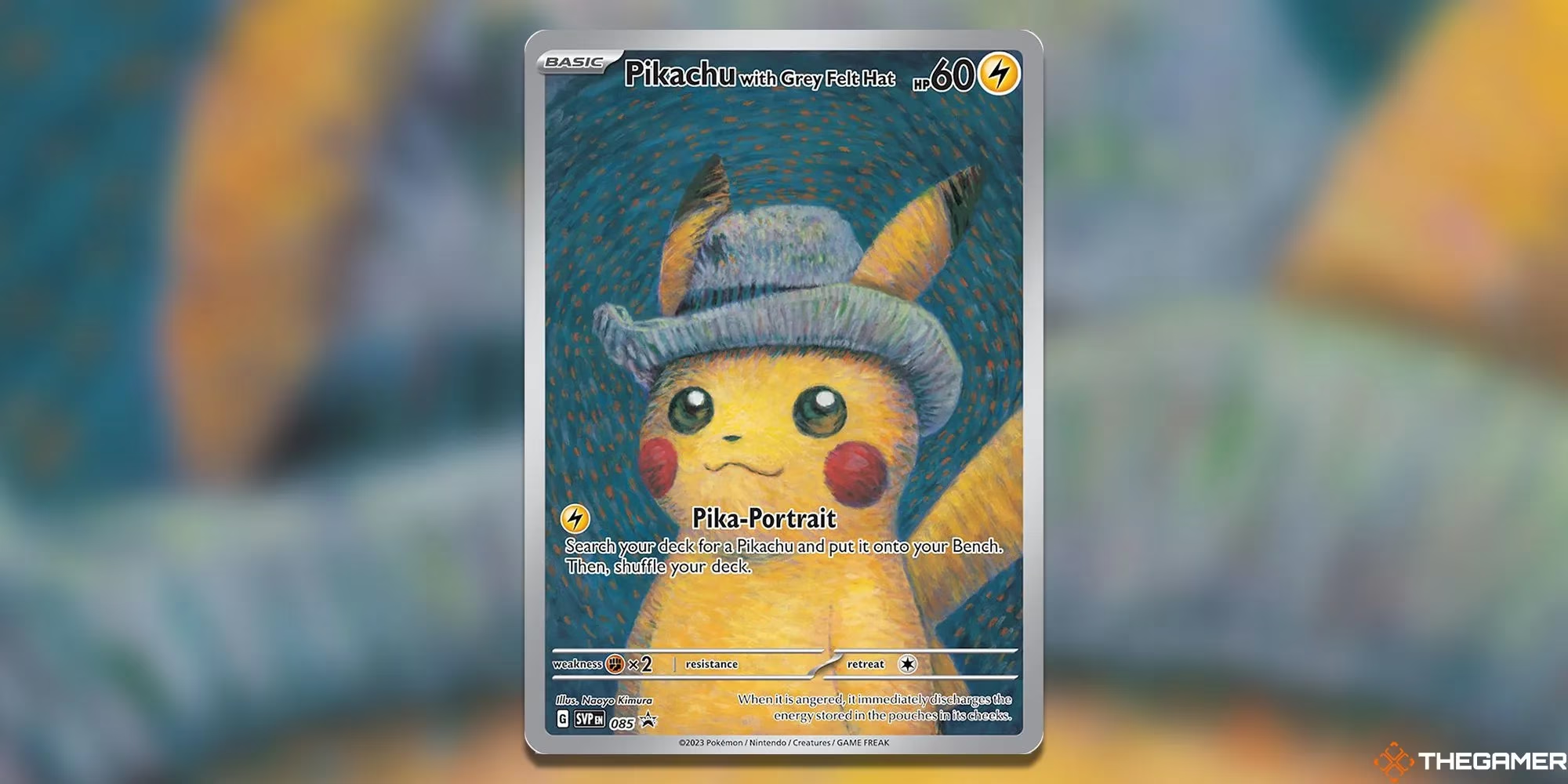
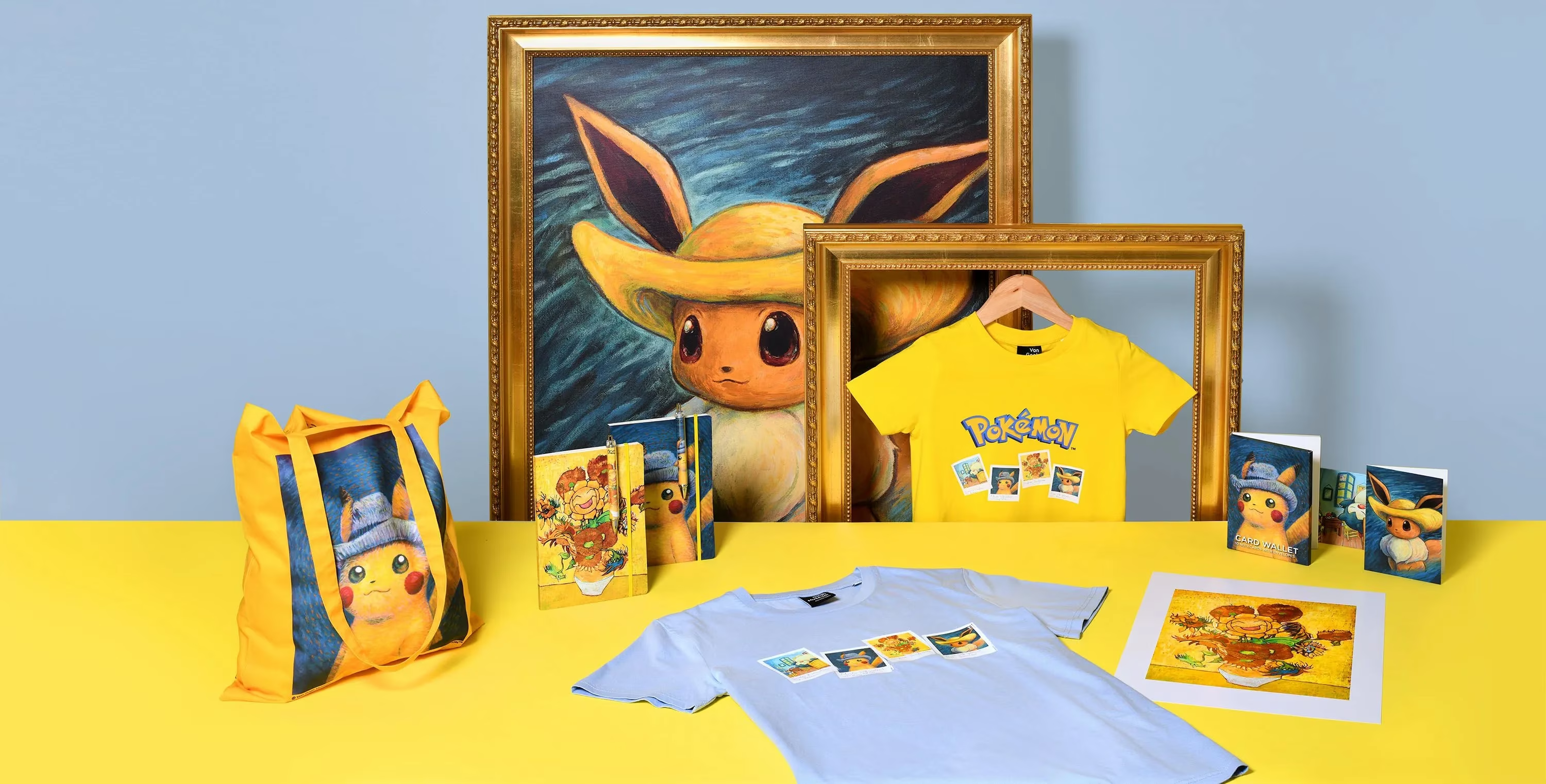
The exhibition itself, running until January 7, 2024, was a genuinely neat idea. It reimagined Vincent Van Gogh's iconic works through a Pokémon lens: Sunfloras bursting from vases instead of sunflowers, a Snorlax and Munchlax lounging in The Bedroom. Visitors received an activity booklet for a scavenger hunt through the galleries. The promised reward for completion? A special Pikachu With A Grey Felt Hat card, a adorable and tasteful homage. It was a lovely, low-stakes bit of fun. Or it should have been.
Within hours of the announcement, a horde descended upon the museum not for artistic enlightenment, but for cardboard conquest. The museum store transformed into a battleground. While some visitors attempted the activity (designed for children, mind you), others executed a merciless retail blitz, buying out anything with a Pikachu or Poké Ball on it. The chaos reached truly pathetic depths with reports of cards being snatched directly from the hands of people who had just received them after finishing the tour. The online store fared no better, with the promo card selling out in nanoseconds, a digital feeding frenzy.
The aftermath was a familiar, depressing tableau. Almost immediately, the felt-hat-wearing Pikachu began appearing on secondary market platforms like eBay with price tags hovering around $300. But the scalpers' avarice wasn't limited to the card itself. Every piece of exhibition merch—postcards, prints, magnets, even novelty pens—was vacuumed up and listed online at exorbitant markups. It was a comprehensive looting of a cultural event, reducing a celebration of art to a grubby, profit-driven scramble.
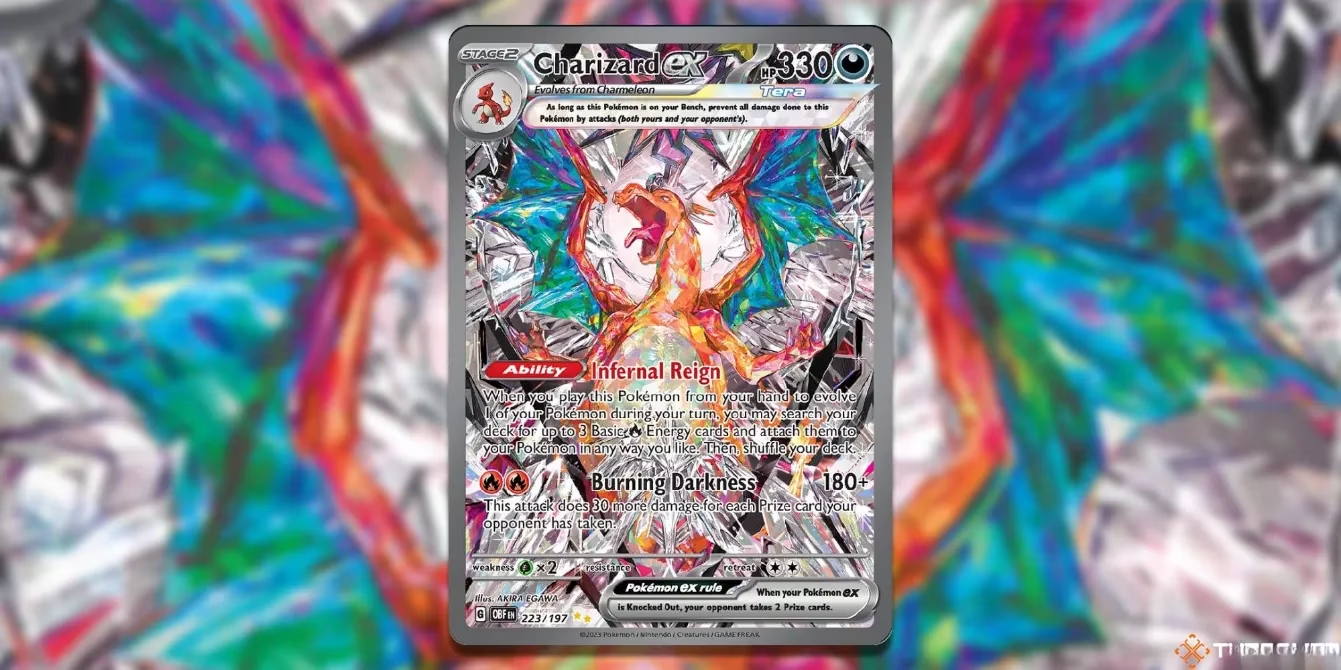
This was not an anomaly. By 2026, looking back, it's clear this incident was part of a well-established, toxic pattern. The Pokémon Company (TPC) has repeatedly courted this exact frenzy. From the Pokémon 151 set launch chaos to the Charizard Ultra-Premium Collection debacles and the infamous McDonald's Happy Meal card invasions, TPC has mastered the art of manufacturing scarcity and riding the wave of hype it creates. They feign surprise each time, issuing statements about "unprecedented demand," but the cycle is meticulously engineered. Hype is good for the brand, even if it permanently stains the experience for actual fans.
A common deflection from the broader community is to label the culprits as "not real fans." Oh, those are just scalpers, they're not us. We're reasonable collectors. This is a convenient fiction. The sad truth is that a significant portion of the Pokémon TCG community has prioritized conspicuous consumption and speculative hoarding over actually playing the game. A quick scan of major online forums reveals endless posts flaunting "pulls" and showcasing shrines of sealed product, with genuine discussion about deck-building and strategy often relegated to quieter, niche corners. The "game" for many is the acquisition itself, a relentless pursuit of ownership by any means necessary.
This stands in stark contrast to other major trading card game communities. While Yu-Gi-Oh! and Magic: The Gathering certainly have their finance bros and collector markets, their communities don't seem to collectively short-circuit over a promotional item with the same frantic, embarrassing fervor as Pokémon fans. There's a unique, almost pathological brand of Pokémon-specific nonsense where the perceived value of a cute Pikachu card completely overrides reason, dignity, and basic museum etiquette.
The economic irony is laughable. For the price of one scalped Van Gogh Pikachu in 2023, you could have purchased multiple competitive, tournament-ready decks. The card itself, while charming, holds no significant gameplay value. It's a promotional souvenir, not a golden ticket. Those who paid hundreds for it are likely sitting on a asset that has depreciated significantly now that the 2026 hype has well and truly died down, a monument to a moment of poor financial judgment fueled by FOMO (Fear Of Missing Out).
Ultimately, the Van Gogh Museum incident was a perfect storm of corporate strategy meeting fanatical consumerism. Scalpers exist because the market allows them to thrive. Until the community collectively decides that paying a month's car payment for a promotional card is absurd, and until The Pokémon Company genuinely prioritizes fan access over hype generation, these farcical scenarios will repeat. One can dream of a future where promo cards are simply nice bonuses, not the catalysts for the ransacking of a children's art activity. But in the wild world of Pokémon, that future seems about as likely as finding a real-life Mew under the truck by the S.S. Anne.